Showing posts with label laws. Show all posts
Showing posts with label laws. Show all posts
Thursday, October 2, 2008
Wednesday, September 10, 2008
Miraculous Minutiae

So. They've given the Large Hadron Collider the old test run, and we're all still here. (It drives me nuts, not being able to figure out definitively if it's HAY-DRAWN or HA-DRAWN.) Of course, if in that initial pass somehow we miraculously reprogrammed reality, we'd none of us ever know it, because, well . . . it's reality, and as we've always known it. As far as we know. Anyway, nobody's even colliding anything yet, so we've got a few more hours, days, weeks, bi-annual periods before we have to resort to our emergency blackhole procedures. (That's good, because my patented Blackhole Resistant Skullcap [with NEW Dense-Particle Bi-Weave trim{TM}] is on back-order.) Actually, everything I've read about it suggests that the cause for fear of man-made blackhole is greatly exaggerated. Particles do what we're now doing to them all the dang time. We just get to catch them at it now. Hopefully.
It got me thinking, though, as I watched the news report on BBC-America this morning. It's a curious winnowing down from "large" things and ideas and efforts that leads us to a profound effect that's instigated on a profoundly "small" scale. I don't know a whole lot about CERN and particle colliders (though this offers a pretty good overview), but from what I understand, this is rather a project that's been in the making in one sense or another for decades, and requires huge amounts of facilities of all kinds. Yet it all comes down to getting one of the smallest things we can identify to behave in a specific way. And the result?
Specificity is important. Making distinctions is, after all, sort of all there is to abstract thought, and it has led us to so many important discoveries and interesting perspectives. I like to believe there's a unifying aspect to abstract thought as well, something that exists purely for the purpose of combining things and finding commonality, but that's a little harder to cite, much less prove. I can show you how you define "good" and "bad" using a binary code similar to . . . uh . . . binary code, but arguing that going beyond concepts of good and bad is both necessary and desirable only holds up until you have to apply it to choosing between eating a fresh sandwich and one that's been sitting in the sun for a week. In the arts, it would be nice to say we're all doing the same thing, different paths to the same goal, and it's all Zen (or whatever substitute you prefer) but it just ain't true. There's good art. And there's bad art. And there's a lot in between, about which we make many distinctions.
I digress, because this is not my point.
No, my point has to do with how insignificant a person can feel, said person particularly so when he or she is an actor. "Oh, boo-hoo-hoo," you may say. "We've all got it rough." True enough, and I don't mean to single out actors in particular for a pity party. They're just what I know best, and that familiarity piques the effect of everything. As actors (or directors, or painters, or nuclear physicists [or, okay: accountants]) we can very easily lose a sense of purpose because, well, what does it all add up to really? I mean, even the movie stars of yesteryear, with huge, global success, fade into obscurity faster than most. Here we are puttering about with this project and that, producing work that occasionally gets notice, but never quite wide enough notice, never quite profound enough impact on the world at large. And there are so, so many of us. Actors come and go and often get treated as a disposable commodity, and why not? There will always be more actors . . . just as I suppose, barring catastrophe, there will always be more and more people. So where does it all lead? What great or -- hell -- even small significance does the greatest thing we may ever accomplish with our lives, lead to? None, it would seem. We're dropping water into an ocean, one drop at a time; our actions are that minute.
A hadron is actually a subatomic particle made up of quarks, one the smallest objects we can reasonably identify. The science people (those in the know call them "scientists") are pretty worked up about the LHC because for the first time they have a technical possibility of proving the existence of the Higgs boson (the "scientists" inform me that a "boson" is another subatomic particle). The Higgs boson -- to hereby insult the intelligence of every physicist reading this -- is essentially an imaginary thing. They imagined it, not in the sense that it doesn't exist, but in the sense that they used their imaginations in theorizing it. See, the "scientists" basically came up with the Higgs boson (using an understanding of physics, the universe and everything so infinitely beyond mine that there's no analogy to properly satisfy this insertion) to fill the gap in an otherwise balanced explanation of physics, the universe and everything. This explanation is playfully named the Standard Model. (One can not help but picture one of these. You know: just your standard model.) In other words, when you hear the news reports about reproducing the Big Bang, they don't mean annihilating everything everywhere (intentionally, anyway), nor creating a whole new universe (intentionally, anyway), but rather understanding how EVERYTHING came into being. Yes: EVERYTHING.
EVERYTHING, potentially = the result of an interaction on the smallest of scales imaginable. Reaching out from the interaction of two subatomic particles -- the very force of that interaction, mind; not even the particles themselves -- is the potential for consequences that not only affect everything . . . they are everything. This is imaginable to me. It's crazily conceptual, but imaginable. I can also imagine -- though I have to be in just the right mindset -- that the least of my work in this world may go on to have untold repercussions, reaching far into the future and influencing people of similar degrees of diminution and growth both far and wide for ages. In fact, I've already seen some small, yet unexpected, returns on work I've done in my life. Even when all memory of my existence has passed, the ripples of my life will live on and on. Perhaps unrecognized. Perhaps even without the least understanding of their actuality. Yet there they'll be, moving through everything.
I believe the scientists will discover they were all wrong about the Higgs boson, and have an incredible amount of work to do to make the model work again, possibly including throwing out the model and starting fresh. Do I have the physics to back this feeling up? Hell no. I can't even grasp centripetal force; not really. It's just that they seem so certain of it, they just have to have it all wrong. No, I believe this because I believe that our searches have to go on. That's a force I recognize. Imagine, if you will (and why not), the universe as an infinite song, played by an infinite number of instruments and voices. Who wouldn't want to join in? Who wouldn't want to create and contribute the most beautiful music they (and only they) possibly can?

Tuesday, November 20, 2007
The Complete Urban Guide to Proper Umbrella Usage

The Umbrella: Some have argued its worth beyond even that of fire, or the wheel, or individually package snack foods. Known by many names--bumbershoot (or bumpershoot), parasol, canopy, sunshade--and appreciated by many cultures, the umbrella is an essential tool in humanity's war against the elements. Canes, hats, sock garters, they've all gone the way of the Dodo as far as standard equipment goes, but the umbrella has persevered in the face of fashion, and with good reason. It is versatile and seemingly infinite in variety, it is simple yet effective, and it's nifty.
This is why, dear friends, after enduring yet another day of the perils of a rainy city, I feel obligated to share with you the secrets of that ancient, nigh mystical martial art surrounding the sensitive and affective use of the umbrella in an overcrowded urban en(and "in")vironment. These many secrets of both external and internal practice have been passed down only orally through the centuries, handed from generation to generation of master, all the while cleverly disguised under the nomenclature "common sense." I think you will find, however, when next you visit New York (or Chicago, Washington D.C., Bangor, etc.), that there is nothing at all "common" about this "sense." Let's begin . . .
- Rule the First: Best Defense for Rain, No Be There.
I paraphrase Mr. Miyagi, of course. (Pat Morita, it is widely known, was a long-time secret practitioner of The Way of The Not Retarded With An Umbrella In Public.) This rule is pretty simple. If it's raining, don't go out. You won't get wet. Oh sure, you may spill some water on yourself at some point, but come on. Take some responsibility for yourself. While you're at it, call in sick to work. Think about it. Public transportation will be full to the brim with people convinced they're getting to work faster by not driving, all the while slowing down the public transportation with their numbers. In such an environment, it's an act of charity to fore go one's usual strident work ethic, and charity is one of the 99 Virtues of this style. - Rule the Second: Second-Best Defense for Rain a Hat.
It's true. Hats still work. It may seem ridiculous to us, but not so long ago our ancestors (read: grandparents) wore hats out that had a little more style than just a logo and a standing deck on the front. These hats were not just stylish, but practical, with lots of air underneath to separate one's scalp from the elements and, more often than not, a wide brim all the way 'round what prevented elements from getting all elemental in our faces. This simple alternative, when combined with a long coat, will protect all the essentials from said elements. - Rule the Third: You Need a Coat
No, really. You do. I know, I know, but -- you do. It's the city. Water's going to come at you from directions you never dreamed possible, and it doesn't care how good your legs look in those shoes/pants/eccentric ruffles. - Rule the Fourth: As With the (Hu)Man, So With the Bumpershoot
So you are rash, young Padawan, and have chosen the Way of the Umbrella over the Ways of Responsible Delinquency and/or Hat. So be it. First: You still need a coat. I'm not letting go of this one. Coat, cloak, poncho, whatever--deal. Second, you are unique. You are special unto your own self. Your umbrella must reflect this. If you are larger than most, you may need an umbrella of greater radius, with corresponding longer neck. If you are more diminutive, so shall your umbrella be. Play to your strengths! Far more often than you may imagine, someone of insufficient height takes it upon his or her self to wield a Vorpal sword of a parasol, thinking bigger to be better. This is plainly untrue, and further, is contradictory to the virtue of Not Being a Punk-Ass, another of the 99 Virtues of this style. Further still, with an over-large umbrella, you are imperiling not only others, but yourself, owing to still another of the 99 Virtues: Tendency to Kill Umbrella-Punk-Asses. - Rule the Fifth: Know Your Place
What is your "place"? TWoTNRWAUIP is a sophisticated philosophy and way of life, not just a highly effective art-form, and it recognizes that set rules and forms will ultimately limit our ability to adapt to different challenges. For example, a person who's 5'10" in D.C. might think of his or her self as a tall him or her. Odds are, however, that such a one will find themselves in the shorter margin of humans at some point on a visit to N.Y.C. Ergo, one should learn to judge one's opponent(s) on an individual basis. This is harder than it sounds. To practice properly, one must meditate daily on images of reeds in the wind, unconcerned about the battles of ego that might occur in rainy urban conditions. There is no shame in taking the lower stance. Especially if you're a 4'9", slow-moving, grocery-shopping grandmother. - Rule the Sixth: Movement is the Key to Successful Movement
Herein lies all the complexity of the technique--that formless form that only masters of TWoTNRWAUIP may someday achieve. One must move with precision and ease through the myriad bumbershoots, maneuvering smartly whilst maintaining a sufficient velocity of foot travel, rather like a traceur (a practitioner of le Parkour), or those cooks who chop stuff really quickly. There are many movements, most of which only life can be the teacher of, but the key to them is this: It is not enough to avoid impaling yourself; you must avoid impaling others. Also: Understand that your umbrella is, oddly enough, wet, and can moisten others. Additionally: What is WRONG with YOU? STOP BEING RETARDED.
Dang. I think I need to meditate a little more.
Tuesday, June 5, 2007
Women of New York: Kindly Knock It Off.

There are those in my profession that keep a very close eye on trends. It's advisable, given a field so influenced by socio-political movements and "what the people want." Plus, one is expected to be as attractive (or, as a possible trade-off, intense) as one can. Actors are meant to be seen, and being easy on or fascinating to the eye is a definite plus. Some would even say it is a necessity. Certainly in New York, one has a great variety of beautiful people, a lot of whom aren't even performers (at least in the occupational sense). With the advent of the metrosexual (or as I like to call them, the image-conscious frat boys who have been relieved of the terror of occasionally being branded gay) even the straight men are in on the details of a beautiful appearance and the latest fashions.
I can't be bothered to follow trends from moment to moment, and have no particular instinct for it that would allow me to pick them up without effort. It has been this way since I was a wee one. In high school I was well known for wearing literally nothing but black, every day. A good deal of making that choice had to do with not having to choose much in the way of an outfit each day. (I love the sequences in Pee-Wee's Big Adventure and The Royal Tenenbaums in which characters go to their closets to select from identical suits [and I'm pretty certain that's a bit borrowed from one of the great silent actors' repertoires][not to mention Einstein's habit of it].) I have grown past this technique, but I still am caught unawares by styles and trends, particularly those having to do with clothing.
A clothing trend for women that has walked up to me and smacked me in the face a few thousand times, now that warmer weather has sloughed its way into the Baked Apple, is the T-shirt dress. The very short T-shirt dress. Like, pretty much just a T-shirt, maybe men's size. I should have seen this one coming. What with the encroaching influence of American Apparel and our recent fascination with shifting in and out of the 80s pop culture, this was bound to come up. I guess I should just be thanking my lucky stars (you could be my lucky star, but I'm the luckiest by far) that the side ponytail has remained in remission, and that said T-shirt dresses come in a variety of styles apart from the typical Flashdance variety. Instead, all I can say is this:
Kindly knock it the hell off, Women of New York.
Oh, ha-ha. He's having a comical rant, along the lines of Dennis Leary, Dennis Miller or Patrick Lacey. Oh this should be good, full of sardonic wit and wry commentary on his society, all the whilst keeping himself in check with merciless self-deprecation. Ha-ha.
Seriously. Knock it. Off. Knock it off.
I don't think you fully appreciate the effect you're having on the average heterosexual male (or homosexual female, I presume), Women of New York. Each and every time I see one of you wearing one such "dress," I am instantly and involuntarily transported into a fantasy that you are in my bedroom and I am making you a delicious breakfast of an omelet, whole wheat toast, a glass of cranberry juice and a french-pressed mug of coffee. Because, you see
THAT'S THE CONTEXT IN WHICH I'M ACCUSTOMED TO SEEING A WOMAN WEARING ONLY A T-SHIRT.
It's Pavlovian, or something. I mean, it's documented fact ("It's science.") that it doesn't take much to make men think about sex. I'm not holding you responsible for that, WoNY. I am merely pleading with you, please, to consider that it's a far worse thing to invite the idea that I've already had sex with you, and may get to again, if it's a Sunday and neither of us have anywhere in particular to be. This misconception doesn't put you in danger, of course, unless you consider having an omelet and surprisingly intimate conversation with a strange man dangerous, but I beg you to consider the effect it may have on the public at large. If legislation can be proposed banning iPods for endangering pedestrian traffic, should we not lend the same consideration to those afflicted by the T-shirt dress distraction factor?
And no, no: It doesn't help if you wear a broach, or if the T-shirt is artfully pleated or even if you've added a stylish belt to the ensemble. I still see the so-called dress and think, "Oh. My Lake Braddock Intermediate School production T from The Miracle Worker. Good choice. That one's soft." Maybe you think that wearing tights and boots with it helps to establish--in spite of its cotton magically patented to absently cling to absolutely everything underneath--a more developed sense of outfit. Sorry: No. It doesn't. I just momentarily think we've come in to the lodge from a long, hard day of skiing, and what we really need more than anything else is a dip in the jacuzzi.
And no: It isn't my fault. It simply isn't. I may have fessed up before to compulsive sexual thoughts in the past, but this goes beyond the pale. It's not that I'm stifled by some kind of Victorian repression that makes me scandalized over a glimpse of ankle. It's that you're wearing absurdly casual lingerie, in public. This is your responsibility, WoNY. Take a lesson from Spider-Man. It is indeed a great power, and you're wielding it like your uncle wasn't killed as an indirect result of your inaction. You should always behave as though your uncle was killed as an indirect result of your inaction! Especially when the issue is relative nudity.
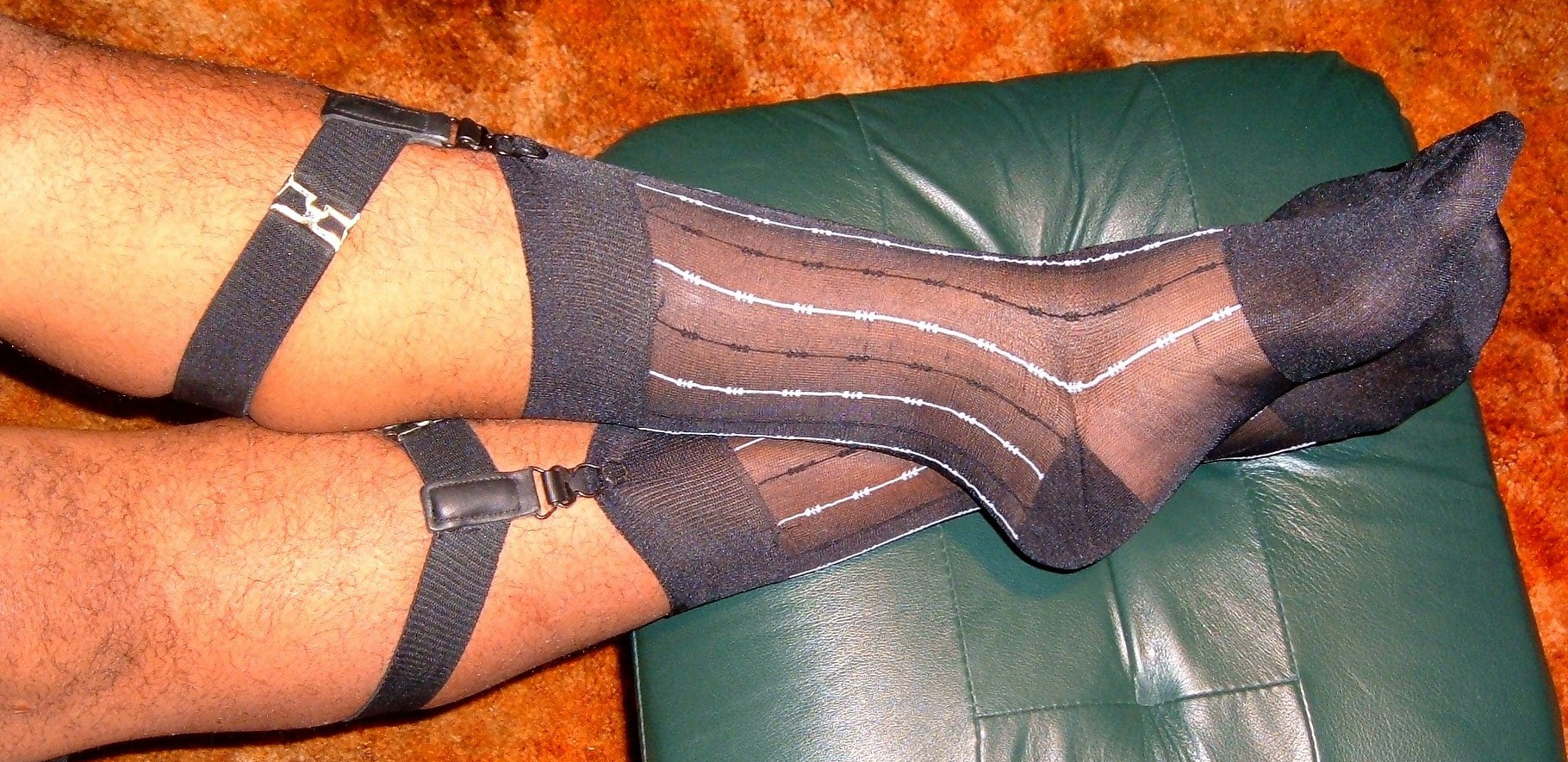
Gentlemen (and lesbians), I do feel we have recourse, desperate though it may be. We have to fight fire with fire. Sort of. I suggest we all take to wearing boxers in public. But not just boxers, my finely-tempered fashion fighting force. Boxers with black socks. Pulled up straight. Preferably with calf garters and dress shoes.
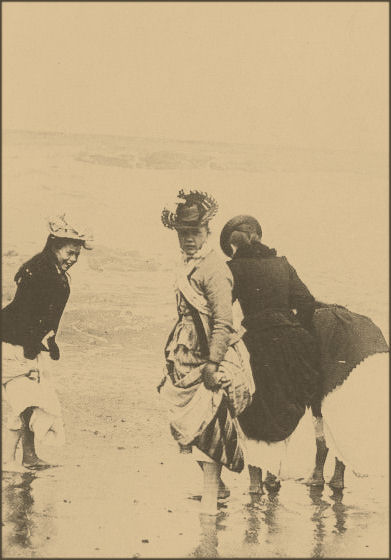
We can not lose! They will bow before our mighty retaliation, cowering in the sight of the most unsightly and awkward antiquated fashion trend the world has yet to know! You think you've got us with your bedroom outfit from the 1980s? How about some 1880s boudoir!
You have been warned, Women of New York. Get out of my T-shirt. Get into some pants.
Monday, April 2, 2007
Allow Me to make the Technical Points Perfectly Clear

That was my trigger phrase for an Irish dialect when I was in college. The way I was taught, when working on a dialect it's best to establish a phrase that contains the trickier aspects of that dialect, and one which you practice so much you can hardly help but to say it in said dialect. That way, you can create a sort of shortcut to the "muscle memory" of speaking in that fashion. The above phrase is good for a sing-songy, northern Irish dialect. It practically starts out syncopated, with breathy vowels and mincing consonants. Plus, you get that great "points," which comes out more like "pints."
Now me brain is stuck composing this very entry in an Erin fashion....
My point (POYNT) in so quoting myself, however, is to address something 'blog-wise that seems to have thrown a few of you loyal readers (a large portion of all 6 of you) for a bit of a loop. In the spirit of tech week, then, allow me to make the technical points perfectly clear.
I felt compelled last week to implement Blogger's comment moderation feature. This was something I was hoping to avoid. I liked the idea of this 'blog being open to comment from anyone without the complication of wondering who was getting their chance to be heard, and who was not. Occasionally, sure, I got comments from strange women wanting me to check out their naked photos and buy Vicadin from them, but even these I enjoyed responding to in a fantastical sort of mindset. Last week, however, I struck a nerve with someone through my blogination, and their response allowed my imagination to roam into the possibilities for abusing the comments section of the 'blog.
Let me be clear: This commenter didn't abuse the 'blog. Far from it. He or she just allowed me to see how rapidly a comment string could, without supervision, descend into madness. So I enacted the moderation feature shortly thereafter. And it's a good thing, too, because shortly after that decision a dear friend of mine interpreted the comment as something of an attack on me and responded in kind. That comment I did not allow to post.
So let me state the rules for you, dear readers. I will let every comment through that I possibly can. In fact, I hope this en-action of moderation (such a politic word for censorship) encourages those of you who choose to comment to do so without reservation or inhibition. The only rule that should guide you is to avoid personal attacks on anyone associated with this 'blog, including anonymous commenters. That won't be allowed to be posted. Exceptions? Good-spirited-yet-heated discourse on a subject, as long as it remains predominantly on said subject, will be allowed to pass. Personal attacks on me or what I have had to say will also be allowed, believe it or not. Those comments will be judged based on a ratio of relevance/cruelty. If you tear me a new one, but raise what I deem to be a good point with it, it's getting published for all to see.
Sorry to write about technicalities, but I wanted to be clear and direct with my vasty audience. I am off now to tech for fourteen hours. ROCK N' ROLL!
Thursday, March 22, 2007
So You Want to Get a Divorce?

This will be a long post. I considered trying to figure out how to link a document online, then got distracted by my own fingernails. The following is a sort of study guide to matrimonial law I served up about a year ago to provide my replacements at my day job with what I hoped was entertaining background information on all they'd be involved with there, legally speaking. My day job has gotten very little attention on this here 'blog. Here, then, is the only time it will come to the forefront of subject matter, I promise. It's written as though speaking to a potential divorcee, but I use it to train the assistant in the hope it will endear them a bit to their demanding clients.
So, you want to get a divorce…?
So, you want to get a divorce? Well, the first thing you have to ask yourself is: Does my husband/wife feel the same way? It’s sort of like when you were contemplating marriage in the first place. (Remember those heady days?) You have to test the waters to see if you’re getting divorced alone or together. This will be important later. The first official thing you want to do (and this is where we come in) is:
CONSULT with a lawyer.
Like most fairly affluent people in the New York area, you’re not about to find a lawyer by surfing the web or cruising lawyer bars. No, you ask your friends for a recommendation. You ask your divorced friends, your accountant friends and your lawyer friends (ha ha), and eventually you get a recommendation. Let’s say it’s for a certain lawyer, Ms. Murgatrude Miggins, Esq. (henceforth “M&M”).
You call up and, because they’ve never heard of you before, they ask you who referred you. You are nervous, because hey, this is a lawyer’s office, and you don’t want anybody to know you’re getting divorced…but eventually the smooth-mannered assistant coaxes a name out of you, writes it down and eventually too, you speak to Murgatrude.
She tells you that she has to meet with you to really evaluate your case, and that this is called a “consultation,” the asking price for which is now $400. This sounds peachy-keen to you (as you are no doubt fairly affluent) and you set a date.
The day arrives, and you sit down with Ms. Miggins, Esq., and spill your innards about the situation. Assuming you feel good about your chances with M&M representing you, the next step involves two documents:
· Retainer Agreement
And
· Client’s Rights and Responsibilities
Retainer Agreement:
A five-page letter of almost entirely boilerplate text and printed on stationary, the retainer agreement is essentially a letter that lays out in some detail the relationship between M&M and her client. The information most usually changed involves the amount of the initial retainer payment, and of course the new client’s name and address wherever applicable.
Client’s Rights and Responsibilities:
A kind of acknowledgement form both the client and the attorney sign expressing an understanding of the various protections afforded a client by the State of New York. The assistant of M&M keeps copies already printed in the green-labeled form file at the base of the left-hand shelves.
You sign the retainer agreement and client’s rights and responsibilities and hand over your retainer payment, and walk out the door feeling very adult and responsible, though a bit more financially depleted. And you will be, immediately, because fast on your heels is the assistant crossing the street to M&M’s bank to deposit your retainer check. Afterwards though, he or she returns to the office and makes a new computer folder for you and an expanding file with your name on it, and likely six folders within labeled: Correspondence, Legal, Drafts, Net Worth / Financial, Retainer Agreement and Notes.
And hey, even if you don’t decide to retain M&M as your lawyer just then, for your $400—and at least an hour of your life—you get M&M’s notes from the session stapled together and filed alphabetically in an expanding file labeled Consults, located in the file drawer directly above the client files.
For those who do decide to continue, the adventure is just beginning!
PRELIMINARY WORK to secure your advantage.
So as we’ve established, you’re fairly affluent, but who wants to take chances with your money or property? There’s a possibility that this thing will come down to a fiscal bloodsport between you and your ex, and while you truly “just want him/her to be happy,” it doesn’t mean you should be condemned to live the rest of your life lonely in impoverished homelessness. If you were the main provider, you need to be prepared to protect some of your assets so they don’t go in entirety to supporting your ex and dependants in your former lifestyle. And if you weren’t the main provider of the family, you need to establish just how “weren’t” you were, and do so early in the process in order to get as much support as possible from your ex. To these ends, the document you need is a:
· Statement of Net Worth
A detailed form, to which your most recent tax returns are attached, which represents your metaphoric fiscal profile. The Net Worth Statement (henceforward “NWS”), as it is sometimes called, is divided into a basic outline of general life information, wage information, expenses, assets and liabilities. M&M usually gives you a blank NWS right out of the gate, and it is up to you to fill it out, but up to her assistant to get it saved into their database. If you are handed a paper copy, later her assistant will type it into the system, saved under your name. If you are emailed the form, just hopefully you’ll fill it out on your word processor and email it back, saving everyone a lot of effort and billable hours.
What else can I do to help myself out in this strange new land, you ask? Well, make sure you have copies of as much relevant financial information from you and your soon-to-be-ex’s life together, including tax returns, records of holdings, deeds, bills and statements. In addition, anything you can do to keep your new attorney on the case without upping your billable hours unnecessarily is great for you. Along these lines, it is definitely best for all concerned that you and your soon-to-be-ex have some kind of agreement about wanting to get divorced from the get-go. That’s not always possible, but it makes for an uncontested divorce, rather than a contested divorce.
Uncontested divorce — Oh sure, the love is gone, but that doesn’t mean we have to have the Supreme Court of the State of New York intervene to get anything done. We’ve talked it over, and it’s time to get a divorce. And listen: It’s not even like we don’t have spitfire argument over who gets what; it’s just that we can agree to disagree and let our lawyers do the negotiating. We’ll work this thing out, print up and sign an Agreement, file for divorce thereafter using a set of forms and documents collectively known as Uncontested Divorce Papers. And then we’ll be free to move on with our lives, having likely spent only what we paid in our respective retainer fees.
Contested divorce — I hate you. Oh, how I hate you. I hate you so much, I’m not even sure I want to give you the satisfaction of actually divorcing you. And I don’t care how many hours, dollars or tears it takes, I and my lawyer are going to make you suffer for whatever it was you’ve done to me. There’s going to be a Summons filed and served on you (or me, eventually), and after that motion upon motion: Affidavits and Affirmations, Orders, Stipulations and Statements, Notices of every shape and color, Requests for Judicial Intervention, Demands and Interrogatories, Subpoenas and Verified Complaints. It won’t end until we’ve spent all of each others’ money, or you’ve died of blood loss from all the paper cuts. Then, maybe, we’ll draft an epic Agreement, only to have to submit a Modification Agreement weeks later, and when the dust finally settles all that will be left to hear is our lawyers bickering over which of them should have to draft and file the final Divorce Papers.
An UNCONTESTED DIVORCE: tricky, but reasonably civil.
Your uncontested divorce may involve preparing and filing some of the papers more commonly associated with a contested divorce, in which case the first thing to be filed would be a Summons, in order to get the case registered and acknowledged by the Powers That Be. Then you’d proceed to whatever you needed. But chances are, unless there are discrepancies in your ex’s NWS or there’s a general feeling of mistrust about the whole process, it will just be document production and negotiation regarding child support and maintenance payments, real estate and equitable distribution of property from here until you have a final draft of your Agreement.
· Agreements
They go by many names—Agreement, Settlement Agreement, Stipulation of Settlement and Agreement—but essentially they are all about two crazy kids coming to a common (and legally binding) resolution about how they’ll divide and live their separate lives. It’s usually a pretty lengthy document, anywhere from 10 to 80 pages, and divided into different titled “articles.” It does not get a back (blue) like every other legal document we deal with.
Most of the work behind an Agreement is done by the lawyers themselves in consultation with their clients and negotiation with one another, either telephonically or in meetings with or without their clients. As a client, you just have to know what you will and won’t accept in a deal, communicate that clearly with your attorney and be readily available to him or her when they need to ask you questions, procure documentation from you or send you a draft for your approval. The rest is the assistant’s domain, just making sure the calls get through and the changes get made to the document in a way that doesn’t sabotage the rest of its numbering and formatting.
And then bing! Bang! Boom! It’s done. You’ve settled the matter, everyone has signed with a notary (M&M) present and the copy of the Agreement to be sent to the Court has both of your initials on every page and next to any handwritten changes made to the text. Pop the bubbly and go spend the night with your new/old girl/boy friend, right? Well, not quite, I’m afraid. Before you’re officially divorced, there is still the dread:
· Uncontested Divorce Papers (UDPs)
Fortunately for you, these papers require little-to-no additional input from you, as most of the information in them has been determined from information you’ve already shared and the very Agreement you finally reached. Unfortunately for you, these “papers” are numerous (anywhere from 12 to 18, depending on whether children are involved) and when they are actually filed is up to the whimsy of the attorneys involved…and they’re not really getting any more money from you. So pester them. Bug them. Know who’s doing what and how. Here for you is a list in no particular order of everything that goes into a set of UDPs:
· Note of Issue
· Notice of Settlement and Proposed Findings of Fact
· Notice of Settlement and Proposed Judgment of Divorce
· Plaintiff’s Sworn Statement of Removal of Barriers to Remarriage
· Defendant’s Sworn Statement of Removal of Barriers to Remarriage
· Verified Complaint
· Affidavit of Plaintiff
· Affidavit of Defendant
· Affirmation of Regularity by Attorney
· Certificate of Dissolution
· Original Settlement Agreement
· Request for Judicial Intervention
· Plaintiff’s Affidavit of Facts and of Children’s Residence *
· Qualified Medical Child Support Order *
· Child Support Summary Form *
· Self-Addressed Stamped Form Postcard
* – Not included where parties have no children as a result of marriage.
Each document (not forms, though) gets its own back, and each has to be signed by somebody, and conform all their language between them and the other papers and the Agreement, and certain of them need what’s known as an Affidavit of Service attached to them, and probably at least three copies of the entire set need to be produced. In other words, it’s a lot of intricate, exacting, boring work that no one wants to do and most will procrastinate endlessly on. And yet, you’re not actually divorced until these UDPs are not only produced but filed properly with and approved by the Court.
That having been done, you’re done! Congratulations! You may now court whomever you choose, and the whole world can know about it! Oh, wait. You say your once-significant other physically abused you and you want money for damages? Or that said other has moved out and won’t talk to you, even about the sweet relief of divorce? Oh. Well then, what you need and will get is:
A CONTESTED DIVORCE: twice the money, half the results.
Oh bejeezums; you went and got yourself in a sticky spot, didn’t you? How could anyone involve themselves in a relationship that could go oh-so-wrong, and once having done so, how could said hypothetical anyone not work to remove themselves from such a situation sooner? Well, if difficult questions could be listed as assets on your NWS, you would certainly be rich as Croesus. Sadly, such is not the case. There are most likely few answers for you, either, but following are some types of legal documentation you should know, as you are likely also to need them in the very near future.
· Summons (With Notice)
This is what sets the ball in motion in terms of your matrimonial action. When one files a Summons, one also needs to fill out two forms, which your helpful assistant has copies of in his or her forms file, located under the left-hand set of shelves in his or her office. The first is a plain old piece of paper, called an Index # Cover Sheet. The second is printed on carbon paper, and is dubbed an Index # Purchase Form. Additionally, you will need a check for $210 (as of 8/05) made out to the appropriate County Clerk with whom the Summons will be filed. Once it’s filed and the Index # is purchased, every copy of the Summons must be standardized with the Index # and date of its purchase.
Then it gets really exciting. The Summons must be served upon the other party for the action to get active. This is either done via a service provider or by hand, by the assistant. But the assistant is rarely enlisted, and of course may refuse this task. This leads us to our next enthralling, all-purpose legal document.
· Affidavits
Simply put, this is the basic document upon which all proof and argument in matrimonial law is established. It’s used for anything voiced in the first-person that’s not “spoken” by a lawyer. That means that if it’s a client’s, assistant’s or even a messenger’s, it’s said in an Affidavit. This also means there are something of an endless variety of the things. Here are some examples:
Affidavit of Service (AoS)
This is the Affidavit an assistant will likely use the most. It also looks completely unlike any other Affidavit, lacking in the usual case heading and numbered-paragraph format. Often, you will find your attorney’s assistant’s name on your AoS. This is because the purpose of an AoS is to attach it to another legal document, one which you’ve sent to the adversary. The AoS is in essence a testimony of the sender, saying, “Yes, boy-howdy, I sure did send that Order to Show Cause to this attorney at this address by mail/messenger/FedEx/personal service/facsimile/trans-meditative state.” Because of the variety of methods of sending said AoS…es, there are also different forms of AoS for each method of delivery.
Affidavit of Plaintiff, or Plaintiff’s Affidavit (or Defendant’s, etc.)
This follows the basic format of every other Affidavit you might run into. It has the standard heading, with case title, Index #, Court and County, and the rest of the document is written in the first-person and formatted with numbered paragraphs, with a signature line at the end for the “author.” You get yourself an affidavit one of two ways. Either your attorney bases it on the notes he or she has taken and drafts it him/herself and submits it for your approval, or he or she bases it on a narrative they’ve asked you to write for them about the ordeals pertinent to the case. The best way to scribe such a narrative is to keep it factual and concise, but not without emotion where appropriate, and to email it so the language can easily be cut and pasted into your Affidavit. This saves everyone time and effort.
The rest of the types of Affidavits are fairly well explained by their titles, and all generally follow this format. Some examples:
Affidavit of Facts and Children’s Residence
Affidavit in Support of Motion
Reply Affidavit
There is a document that usually goes with any Affidavit coming from a client such as yourself, and it is known as an…
· Affirmation
This comes from your attorney, and is almost a carbon copy of the appurtenant Affidavit, only it’s in the “voice” of your attorney instead of you and cites more legal language and cases at certain points. It looks virtually the same; only the title and specific language differ. It’s important that this document match, in sum and substance, every point you have to make in your Affidavit. Obviously, it’s not necessary in the case of AoSes and the like.
· Orders
This is typically quite a short document (how novel) and is a bit like doing the typing for whichever Judge is presiding over your case. In essence, it is what you want the Court to sign off on, to make happen for you. It is usually backed up by an Affidavit, an Affirmation and some Exhibits, all stapled into one back and collectively referred to as an Order to Show Cause (OSC). Orders have a special text in the upper-left corner of the first page designating the particular Court address and room, and the signature line is for the Judge. Additionally, once the lawyer gets a signed Order back from Court, the assistant often has to copy the pages that are amended and signed by the Judge and attach them to any office copies of the Order.
· Stipulations
Similar to the Affidavit, this is an all-purpose document used when asking for a change of circumstance or basically anything more minor than an actual Court Order. It is often comparable to a “mini-Agreement,” in that it is something which both parties (hopefully) sign in agreement of. Examples include:
Stipulation (plain ol’)
Stipulation Extending Time to Serve Complaint
· Statements
Exactly as it sounds, a simple statement of fact(s). The NWS is such a document, although highly formatted. Usually Statements look rather like Affidavits…only they’re Statements.
· Notices
As it sounds, a document making known certain facts or occurrences in a given case. A Notice of Entry announces to all concerned when a particular document was filed in Court (these are attached to the Judgment of Divorce, and Findings of Fact and Conclusions of Law, in the UDPs), and a Notice of No Necessity announces any waiving of normally procedural requirement from the other side.
· Requests for Judicial Intervention
This is when the S. H.’s the F. in a big way. It is more a form than a document, though it is often accompanied by an Affidavit of some sort explaining the situation in greater detail. This document is used to get the Court’s attention in deciding something (said something often being a sort of punishment one attorney wants to inflict on the other for their bad conduct or tardiness) that the lawyers themselves can’t resolve and aren’t willing to negotiate any longer. This form is also filed with UDPs, in that it’s simply procedural when filing papers that require immediate decision.
· Demand for Production of Documents and Interrogatories
These are often directly related to the NWS, in that they’re used when your attorney has reason to suspect that your ex may have something to hide in terms of his or her financial status. These are a matched pair of rather lengthy documents that do what they say. The first demands very specific financial records, the second makes general inquiries into financial status and development. They are used in determining support and maintenance issues on both sides. The corollary to them are Responses to same, which are made far easier when the adversary is willing to email the documents to your attorney, because then his or her assistant just has to copy and paste the demands and inquiries into a new document and insert the answers provided by said attorney.
· Subpoenas
A document more commonly used in connection with the accused and witnesses in a criminal case, Subpoenas are nevertheless occasionally needed in matrimonial affairs. Generally a Subpoena is used to call a person or business entity in to take testimony from, either in the Court or in one of the attorney’s offices. This is another document for which service will be needed, and that service will undoubtedly be provided by an agency accustomed to handling such things, as it is a highly popular hobby in New York to attempt to avoid service of a subpoena.
· Verified Complaints
Yet another document included in UDPs, a Verified Complaint is used in that regard to list very simply the causes justifying a Judgment of Divorce and concisely state what relief is being sought for those reasons. In other contexts, a Verified Complaint can be used simply to get a complaint the party has on record with the Court, regarding anything from excessive lying to physical abuse.
Subscribe to:
Posts (Atom)